A truck breakdown on a busy highway or rural stretch isn't just a frustration — it's a serious safety and legal situation. For drivers needing truck repairs in Port Macquarie and across the Mid North Coast, knowing the right steps before it happens could protect your licence, your load, and your life. Here's a practical breakdown of what to do, what to avoid, and how to get back on the road as quickly and safely as possible.
Why Truck Breakdowns Are More Than an Inconvenience
A stationary heavy vehicle on a highway or major road is a genuine hazard to other road users, particularly in low-visibility conditions or on roads with limited breakdown areas.
There's also the commercial reality. Every hour off the road costs money — in missed deliveries, contract penalties, and idle driver time. For owner-operators and small fleet businesses in regional areas, a breakdown that isn't managed quickly and correctly can have serious downstream consequences.
Your First Steps When a Breakdown Happens
The first few minutes after a breakdown are the most important. Use this truck breakdown checklist to work through each step in order:
- Get off the road if possible.
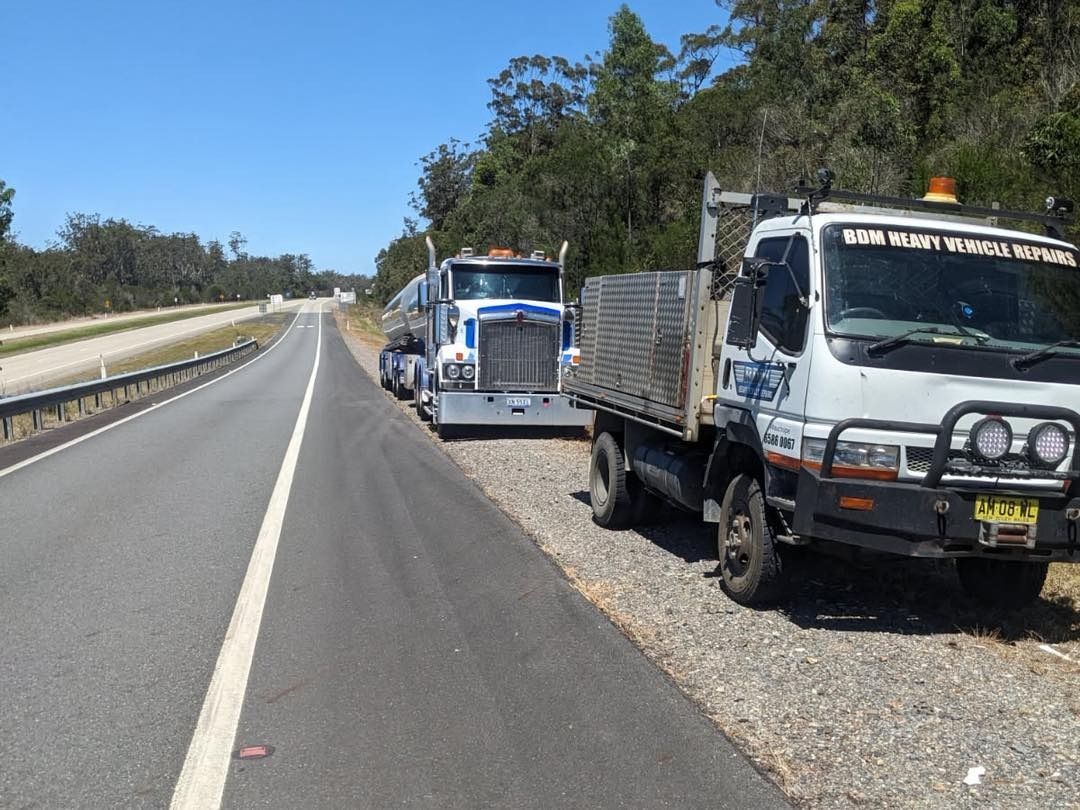
Guide the vehicle to the shoulder, a side road, or a designated rest area. Never stop in a live lane unless the truck cannot move at all.
- Apply the park brake and switch on hazard lights immediately.
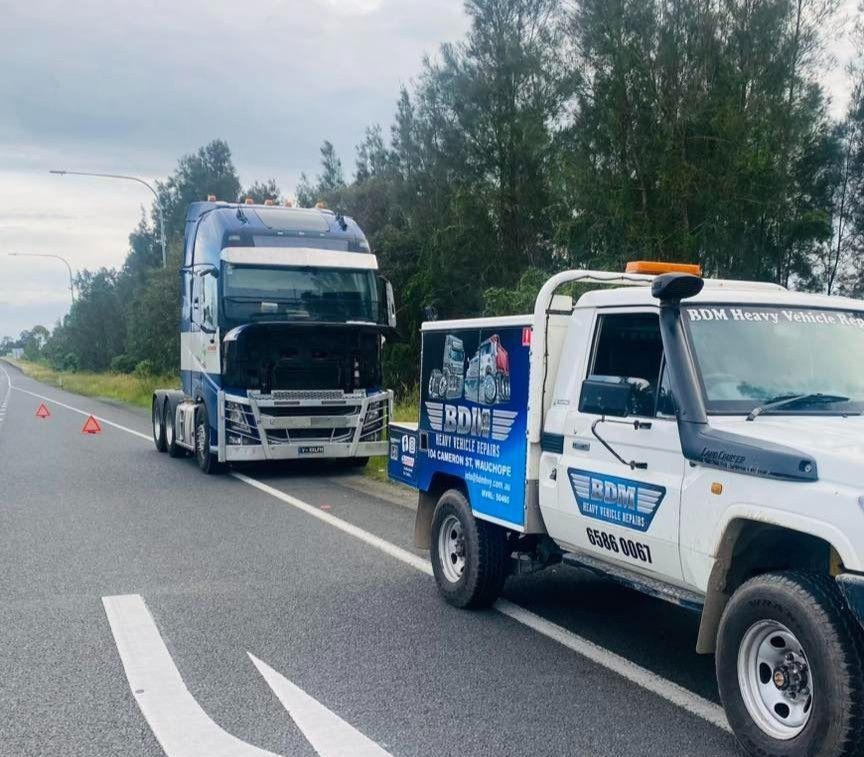
- Deploy warning triangles or markers. Place them behind the vehicle at appropriate distances for the road type and speed zone.
- Stay away from live traffic. If you exit the cab, move to the safety barrier side or well behind the vehicle.
- Notify your employer, fleet manager, or dispatch. If you're an owner-operator, contact your insurance provider and note the time and location.
- Call a qualified heavy vehicle breakdown service.
Understanding the
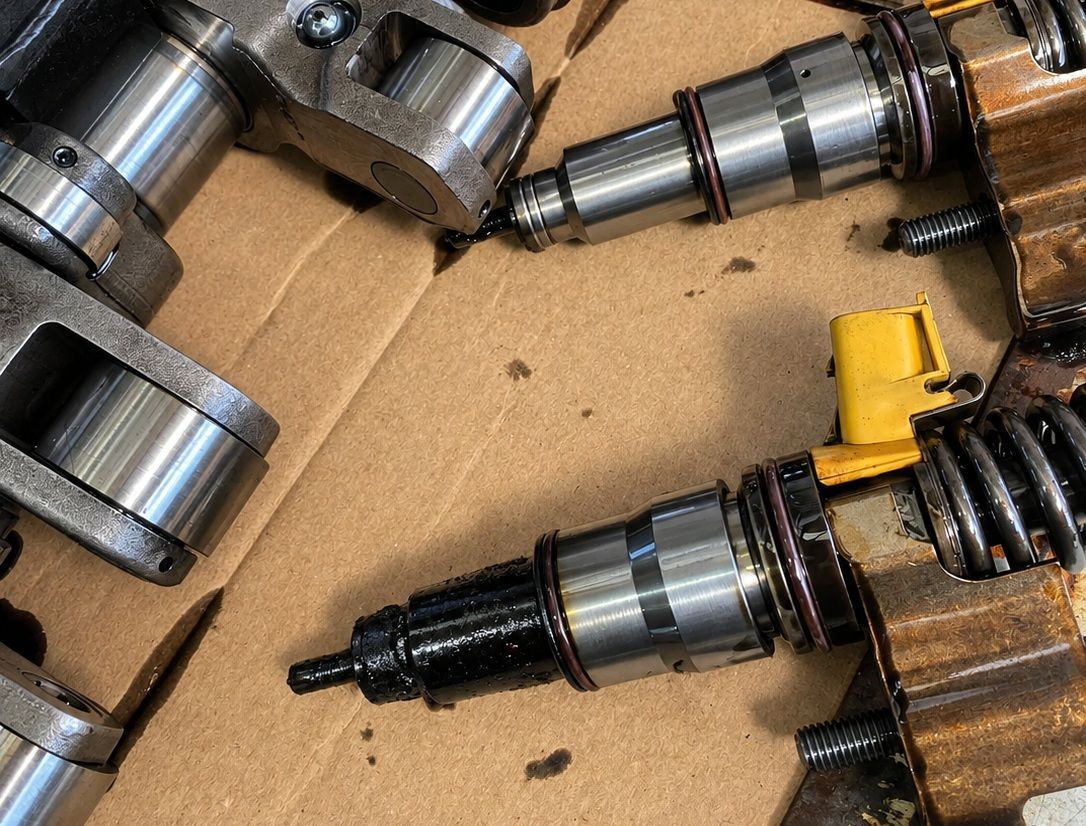
common causes of heavy vehicle breakdowns can help you spot warning signs before you're stuck on the roadside.
Legal & Safety Obligations for Broken-Down Heavy Vehicles
Roadside truck safety isn't just common sense — it's a legal requirement. Heavy vehicle operators in NSW have specific obligations when a vehicle breaks down on a public road. You're generally required to make the vehicle visible to approaching traffic using hazard lights and warning devices, with warning triangle placement varying based on road type and speed limit.
If a load shifts or becomes unsecured during a breakdown, managing that hazard is also your responsibility. Leaving an unsecured load unattended on a public road can create liability under heavy vehicle transport laws.
Roadside repairs to braking systems, steering components, or load restraints may also carry compliance requirements before the vehicle is legally permitted to re-enter traffic. A qualified mechanic will know what applies.
Why You Shouldn't Attempt Roadside Repairs Yourself
The impulse to sort it yourself is understandable — especially if you're an experienced driver with mechanical knowledge. But heavy vehicle systems are complex, and a repair that appears complete can mask an underlying fault. A brake system that seems to hold in place may fail under load conditions further down the road.
There's also the exposure risk. Working under or around a heavy vehicle in a live traffic environment, without the right equipment or safety setup, is dangerous. Professional breakdown crews are specifically trained and equipped to manage that environment safely.
Rather than risking a roadside repair, call a
24-hour breakdown service and let a qualified mechanic come to you.
What to Expect When You Call a Heavy Vehicle Breakdown Professional
When you call, you'll be asked for your location, the nature of the fault, and details about the vehicle and load. This allows the mechanic to arrive prepared with the right parts and tools for your specific truck type.
On arrival, a qualified technician will assess the vehicle before touching anything — checking for fuel or fluid leaks, brake status, tyre condition, and load security before diagnosing the fault. Where the issue can be resolved on-site, the repair is completed roadside. Where it can't, the technician will arrange towing and advise on what workshop repairs are needed.
Preventing Future Breakdowns with Regular Servicing
Most heavy vehicle breakdowns don't happen without warning. Tyre pressure issues, coolant leaks, worn brake components, and failing alternators all give signals before they cause a full stop. Regular servicing at the correct intervals is how those signals get caught before they become incidents.
Many roadside breakdowns can be avoided altogether with
essential pre-trip checks for heavy vehicles before heading out. A pre-trip check takes minutes and can flag issues that would otherwise leave a truck stranded far from the nearest workshop.
Building a relationship with a local heavy vehicle mechanic who knows your fleet also pays off. A mechanic familiar with your trucks will notice when something looks different — and that familiarity is a practical form of breakdown prevention.
Contact BDM Heavy Vehicle Repairs on the Mid North Coast
When a breakdown happens, we're ready to respond — any time of day or night. We provide 24/7 mobile mechanic services for trucks, buses, and heavy equipment across Port Macquarie, Wauchope, Kempsey, Taree, and the surrounding Mid North Coast region.
Our team arrives in a fully equipped mobile unit, prepared to diagnose and repair on-site wherever possible. We work exclusively with heavy vehicles, so we understand the systems, the compliance requirements, and the pressure of getting commercial vehicles back into service quickly.
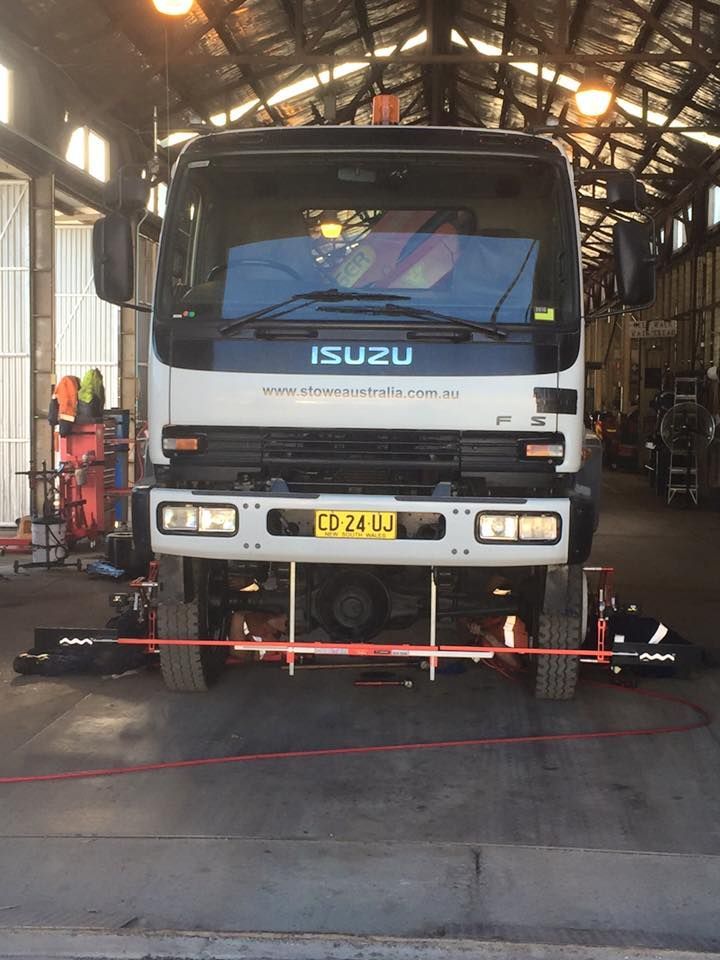
Where a roadside repair isn't possible, we'll arrange towing and get your truck into our workshop. If your truck needs more than a quick fix, we offer full
truck repairs in Port Macquarie to get you back on the road safely. One call gets the right people moving — don't wait on the side of the road longer than you have to.
Frequently Asked Questions
What should I do first if my truck breaks down on a highway?
Get the vehicle off the road if possible, apply the park brake, and activate hazard lights immediately. Then deploy warning triangles before exiting the cab. Your priority is making the truck visible and getting yourself to a safe position away from live traffic.
Are there legal requirements for broken-down heavy vehicles in NSW?
Yes. Drivers must make the vehicle visible using hazard lights and warning devices, with triangle placement varying based on road type and speed limit. Unsecured loads also carry obligations under NSW heavy vehicle transport laws. A qualified breakdown professional can advise on compliance if you're unsure.
Can I attempt to repair my truck on the side of the road?
Technically yes, but it carries real risk. Roadside repairs on heavy vehicle systems — particularly brakes, steering, and air systems — can mask faults that fail later under operating conditions. The safest option is to call a qualified breakdown service and let a professional assess the vehicle first.
How long does a mobile heavy vehicle breakdown response take?
Response time depends on your location and the service provider. Having your exact location ready — road name, kilometre marker, or GPS coordinates — speeds up the response.
What if my truck can't be repaired on the roadside?
If the fault requires workshop repairs, the breakdown mechanic will arrange towing and advise on what work is needed. Not all faults can be resolved roadside, and it's safer to have the vehicle towed than to attempt a repair that leaves it unfit to operate.